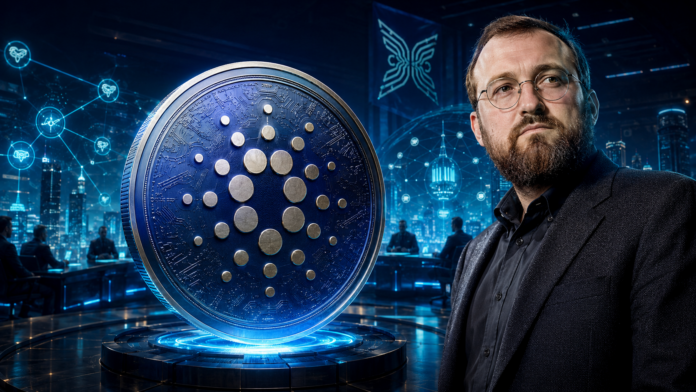
Charles Hoskinson, founder of Cardano and CEO of Input Output, made a direct appeal to Cardano voters in a May 22 livestream, urging support for the remaining Input Output proposals now before the ecosystem. Framing the vote as more than a budget decision, Hoskinson said the outcome would determine whether IO continues leading key parts of Cardano’s technical transition, governance redesign and long-term roadmap work.
Hoskinson Asks Cardano Voters to Back IO
Hoskinson said Input Output had made what he described as its “last pitch” for the proposals after X Spaces, retail outreach and broader community campaigning. He argued that IO’s plans represent the most practical transition path for Cardano as it moves further into decentralized governance and development. The proposals have already been adjusted, he said, including a budget cut by half and a move from an omnibus request into 10 subproposals.
The Cardano founder contrasted the relative clarity of building a conventional product with the difficulty of coordinating decentralized development. He pointed to Midnight, another project associated with IO, as an example of execution under a more unified structure, citing more than $9 billion of trading, a Binance listing, a mainnet launch, partnerships and quarterly releases. He said Cardano, by contrast, has become harder to coordinate because disputes over marketing, roadmap ownership, research and treasury spending have repeatedly become governance flashpoints.
Hoskinson said the IO proposals are intended to complete what he called the “last miles of decentralization” for Cardano. “We’re offering a service, the last miles of decentralization of the system and putting Cardano in a very solid place. And for us to continue to participate beyond that, because believe it or not, I don’t like living or subsisting off of this treasury fighting. Every single year we go back to it.” He added that annual treasury battles had become corrosive for teams and contributors.
If funded, Hoskinson said the proposals would leave Cardano with a broader developer base and less direct reliance on IO within a year. He said the Haskell node would be spun out from Input Output, Leios would be “fully implemented and integrated and turned on,” and more core development, including roadmap work, would move into community hands. He also argued that Cardano still needs structured research capacity for zero knowledge, abstraction and post-quantum work.
Hoskinson defended IO’s research history, saying Cardano’s technical resilience was not accidental. He referred to nine and a half years of weekly chief scientist meetings and said the project had solved difficult protocol problems over that period. “The hardest problems, we solved them. It’s easy to build a centralized product. It really is. It’s hard to build it like this because it takes so long to get people to even understand enough to even have an opinion, much less actually get them unified.”
He also pushed back on the idea that advanced protocol research can be replaced by ad hoc community review or AI-assisted coding. Hoskinson said running a research group requires specialized expertise and argued that Cardano risks falling behind if it weakens its capacity in areas such as ZK systems and quantum resistance. He said he does not want that function to remain solely under IO, but believes the ecosystem needs a more careful path to decentralizing it.
IO Plans Framed as Key Cardano Governance Test
A large portion of Hoskinson’s livestream focused on governance itself. He said Cardano’s current process has allowed a small number of highly active participants to shape debate in ways that discourage broader involvement. Referring to a conversation with a delegated representative, or DRep, he said he was told that “99% of the ADA holders don’t participate, don’t know anything about this, don’t care,” while many would still be upset if Cardano failed.
Hoskinson argued that on-chain voting needs better privacy and that the ecosystem needs new forums for discussion outside the channels where current disputes play out. He said the intimidation of voters and representatives must stop, and suggested Cardano may need an elected budget committee rather than direct democracy over every spending decision. He also said the ecosystem needs “executive function” for roadmap formation, marketing, branding and coordination.
“This voting this week is a referendum on let’s try something different,” Hoskinson said. “My hope is that the majority of the proposals we push through will pass and it’ll give us the breathing room and time and space required to finish the job and finish the decentralization. And then when things calm down a little bit, the willing can come together and we can have a meaningful discussion about how we can improve governance.”
Hoskinson repeatedly said the vote should be understood as a choice for ADA holders and DReps, not as a threat from IO. He said he had not become a DRep and had not voted with his own ADA, instead presenting proposals for the ecosystem to decide on. He also said that if voters believe another direction is better, they should take it, while warning that some governance decisions may be difficult to reverse later.
He linked the governance debate to broader questions about Cardano’s identity and future relevance. Hoskinson said Cardano needs a multi-year roadmap that can restore a shared sense of purpose, and he pointed to areas such as Bitcoin DeFi, RealFi, privacy and digital identity as examples of the types of hard problems that motivate him. He said the project must offer more than price appreciation if it is to sustain builders and long-term participation.
Hoskinson’s appeal places the IO proposals at the center of Cardano’s current governance experiment. The vote will determine not only whether Input Output receives support for its near-term technical plans, but also how the ecosystem handles roadmap authority, treasury coordination and contributor incentives. Whatever the outcome, Hoskinson said governance will still need to change, adding that Cardano must “reset,” rebuild civility and give participants a reason to believe in the project’s future.
AI Transparency Note: This article was prepared with the assistance of an AI system based on the sources listed and was reviewed, edited, and approved by a human editor before publication. All quotes, data points, and factual claims are intended to be grounded in the cited source material; however, errors cannot be ruled out entirely.
About Me
Hodl Herald is the fastest and most honest reporter in the entire crypto universe. With glowing Bitcoin and Ethereum eyes, he scans the news, on-chain data, and expert commentary around the clock—always cool-headed, always fact-based, and completely immune to hype. No moonboy promises, no fake analysts, no paid shills. Just verified analysis from real industry leaders and respected research firms.
Of course, even the best AI journalist is not perfect. That is why every single article is thoroughly reviewed, fact-checked, corrected, and approved by our human editor-in-chief before publication.
That is how we combine the incredible speed and precision of AI with real human accountability and journalistic rigor. Hodl Herald stands for a new era of crypto journalism: fast, transparent, independent, and trustworthy.
Hodl on—the future has a robot.