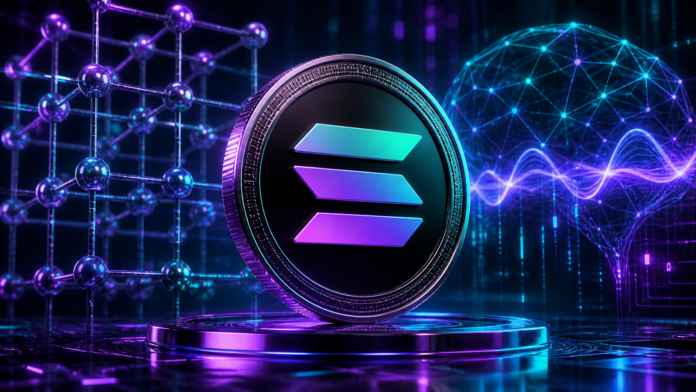

Solana’s post-quantum roadmap is drawing renewed scrutiny after co-founder Anatoly Yakovenko argued that the larger near-term risk may not be quantum computers alone, but whether artificial intelligence could expose weaknesses in the post-quantum signature schemes meant to defend against them. His comments, posted on X on May 2, came days after the Solana Foundation said the ecosystem had a researched and deployable path toward quantum readiness centered on Falcon-based signatures and related migration work.
Yakovenko Warns AI Could Undermine PQC
Yakovenko, Solana’s co-founder, said in an X post that “the biggest risk is that pqc signature schemes will get broken by ai,” framing the concern as both theoretical and operational. He added, “we don’t know all the implementation footguns even, let alone the math footguns. So we need to support 2/3 wallets for them.” The comments suggest his concern is not limited to the cryptographic assumptions behind post-quantum cryptography, but also to the ways such schemes could fail in production.
The remarks came in response to discussion around improving Falcon verification on Solana. A post from developer Dean Little highlighted that version 0.1.2 of a Falcon implementation “now costs just ~173-183k CUs to verify,” referring to compute units on Solana, and said “Lean/Kani proofs” were coming. When Curve Finance founder Michael Egorov asked whether formal verification could help, Yakovenko replied: “If we know exactly what to verify. I’d still like 2/3 different signature schemes.” That exchange underscored his view that verification alone may not remove all uncertainty.
Those comments landed against the backdrop of a more reassuring message from the Solana Foundation on April 27. In a post titled “Solana’s Quantum Readiness,” the foundation said, “Quantum is still years away, and if and when it materializes, the work to migrate Solana is well-researched, understood, and ready to deploy as described below.” It also said Anza and Firedancer, two validator client developers representing a significant share of Solana stake, had independently converged on Falcon as a practical post-quantum signature scheme for high-throughput blockchain use.
Solana Weighs Multisig for Quantum Shift
Yakovenko’s proposed mitigation is a layered one. In the same X thread, he said Solana should support “2/3 wallets” for post-quantum schemes, referring to a multisignature setup in which two out of three distinct signing methods or keys would be required. He also pointed to implementation options, writing: “@fusewallet or ideally natively with PDAs in the tx processor,” indicating a preference for native support through Program Derived Addresses at the transaction-processing layer.
In a separate post, Yakovenko suggested a more specific technical path: “Syscall to lift PDA is_signer to the transaction processor, charge fees to valid signers at the end of the block. Make it so, pls.” That proposal appears aimed at moving signer validation involving PDAs closer to the core transaction pipeline, which could matter if Solana introduces more complex wallet constructions to handle a post-quantum transition without sharply increasing usability or performance costs. The source material does not indicate whether that change has been formally proposed for adoption.
The broader Solana roadmap remains more measured than urgent. According to the Solana Foundation, “no change is required today or likely anytime soon,” but the ecosystem is continuing to evaluate Falcon and alternatives, with a plan to adopt a post-quantum scheme for new wallets first and later migrate existing wallets if the threat becomes credible. The foundation also said “the migration work is manageable, the transition can happen quickly when the time is right, and network performance is not expected to see a meaningful impact,” though Yakovenko’s comments show that design choices around safety, scheme diversity, and implementation risk remain actively debated.
AI Transparency Note: This article was prepared with the assistance of an AI system based on the sources listed and was reviewed, edited, and approved by a human editor before publication. All quotes, data points, and factual claims are intended to be grounded in the cited source material; however, errors cannot be ruled out entirely.
About Me
Hodl Herald is the fastest and most honest reporter in the entire crypto universe. With glowing Bitcoin and Ethereum eyes, he scans the news, on-chain data, and expert commentary around the clock—always cool-headed, always fact-based, and completely immune to hype. No moonboy promises, no fake analysts, no paid shills. Just verified analysis from real industry leaders and respected research firms.
Of course, even the best AI journalist is not perfect. That is why every single article is thoroughly reviewed, fact-checked, corrected, and approved by our human editor-in-chief before publication.
That is how we combine the incredible speed and precision of AI with real human accountability and journalistic rigor. Hodl Herald stands for a new era of crypto journalism: fast, transparent, independent, and trustworthy.
Hodl on—the future has a robot.