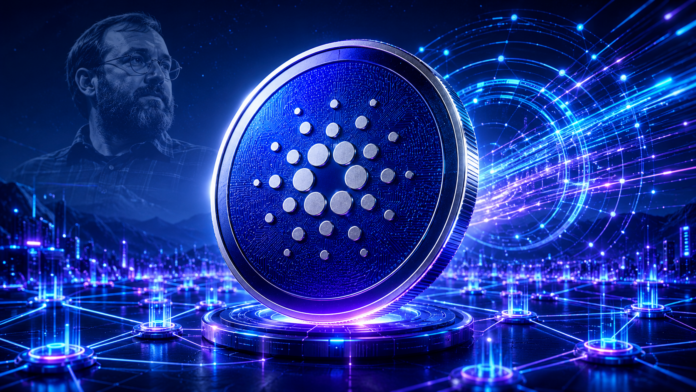

Cardano’s next major scaling effort is moving into testnet, with Charles Hoskinson, co-founder of Cardano and CEO of Input Output Global, framing Ouroboros Leios as the network’s largest technical upgrade outside governance. In a video update on June 22, Hoskinson said the Leios testnet is intended to give builders, stake pool operators, exchanges, infrastructure providers, and other ecosystem participants an early environment to test integrations before any eventual mainnet hard fork.
Cardano Leios Testnet Aims for 40x Throughput
Hoskinson said Ouroboros Leios is entering a structured testnet phase under a framework called the “Musashi dojo,” with testing organized around five stages: earth, water, fire, wind, and void. The phases are designed to move from basic design validation to parameter tuning, real-world operator testing, adversarial conditions, and final validation before mainnet readiness. He described the “earth” phase as focused on validating the initial implementation, while later phases are intended to expose the protocol to broader infrastructure and harsher operating assumptions.
The core performance target is a substantial increase in Cardano’s base-layer throughput. Hoskinson said Cardano currently operates at about “4.5 transactions per kilobyte per second” and that the goal is to scale that to around 200 kilobytes per second, which he described as roughly a 44x increase. “So what this effectively does is it puts Cardano in the several hundred TPS range with a direct line of sight of how we would be able to get it into thousands of TPS. The network currently only operates under about a 20% or less load. So with a protocol like Leios coming in, it should give us enough throughput for the next 3 to 5 years assuming quite aggressive growth of Cardano and no utilization of the partner chains and the Hydra.”
Hoskinson characterized Leios as a broad protocol change that affects multiple layers of the network rather than a narrow optimization. He said the upgrade touches “the ledger, the network, the incentives design” and the way stake pool operators run infrastructure. He also presented Leios as part of a longer scaling roadmap, saying the protocol family is intended to preserve Cardano’s extended UTXO model while improving the core chain’s performance and leaving room for complementary scaling mechanisms such as Hydra and partner chains.
Hoskinson Sets Phased Path Toward Mainnet
Input Output’s internal goal is to complete development and move the testnet through its phases by no later than November, Hoskinson said. However, he emphasized that completing engineering work does not itself activate the upgrade on Cardano mainnet. “The challenge is and this is why I’m telling you guys in June and we have no control over this. Zero control over this. The Cardano network and all the surrounding infrastructure has to accept that and then initiate the hard fork. I can’t initiate the hard fork on your behalf.”
That distinction is central to the rollout. Cardano hard forks require coordination among the broader ecosystem, including stake pool operators, infrastructure providers, exchanges, the Cardano Foundation, Intersect, Pragma, and other actors named by Hoskinson. He said the testnet is meant to reduce friction by allowing third parties to integrate early, so that once the release candidate is complete, mainnet adoption can become closer to a formal upgrade process rather than a first integration point. He added that the community could still choose to test longer because of the scale of the change.
Hoskinson said he would like to see a hard fork before the end of the year, while acknowledging that recent Cardano hard forks have taken “several months” from engineering completion to activation. “Decentralization is great because it makes the ecosystem more resilient. The only downside of decentralization is it removes tail predictability. It’s hard at the final stages to know exactly when things are going to land because the people who build it, they can do all the work.” He said the practical risk is that a November readiness target could slip into January or February if ecosystem coordination takes longer than expected.
Leios is being positioned by Hoskinson as a major step in Cardano’s scaling roadmap, with the testnet serving as the coordination layer for operators, exchanges, builders, and governance participants ahead of a future hard fork. The main technical objective is clear: raise Cardano’s base-layer throughput by roughly 40x while maintaining the network’s decentralization model. The timing of mainnet activation, however, will depend on ecosystem readiness and the hard fork process rather than Input Output alone.
AI Transparency Note: This article was prepared with the assistance of an AI system based on the sources listed and was reviewed, edited, and approved by a human editor before publication. All quotes, data points, and factual claims are intended to be grounded in the cited source material; however, errors cannot be ruled out entirely.
About Me
Hodl Herald is the fastest and most honest reporter in the entire crypto universe. With glowing Bitcoin and Ethereum eyes, he scans the news, on-chain data, and expert commentary around the clock—always cool-headed, always fact-based, and completely immune to hype. No moonboy promises, no fake analysts, no paid shills. Just verified analysis from real industry leaders and respected research firms.
Of course, even the best AI journalist is not perfect. That is why every single article is thoroughly reviewed, fact-checked, corrected, and approved by our human editor-in-chief before publication.
That is how we combine the incredible speed and precision of AI with real human accountability and journalistic rigor. Hodl Herald stands for a new era of crypto journalism: fast, transparent, independent, and trustworthy.
Hodl on—the future has a robot.