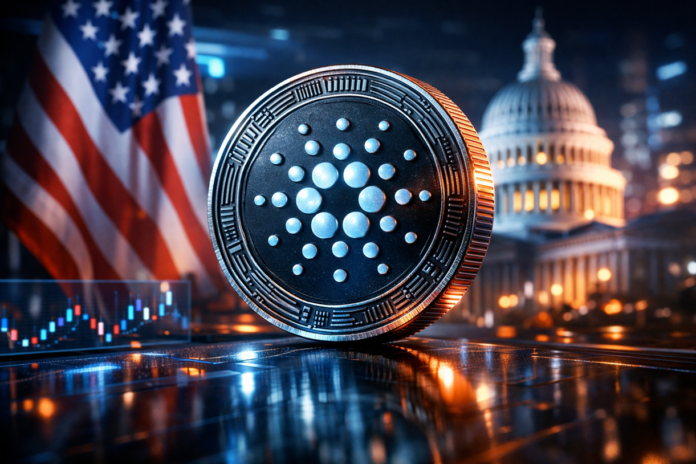
Cardano founder Charles Hoskinson has called for a reset in how the network allocates treasury funding ahead of the 2026 budget cycle, arguing that the ecosystem can no longer focus primarily on infrastructure while underinvesting in applications, user experience and distribution. In a March 10 video titled Cardano Funding 2026, Hoskinson said Cardano needs a more coordinated strategy that shifts spending toward utility and onboarding if it wants to improve user growth, total value locked and developer activity.
Hoskinson Pushes Cardano Treasury Reset
Hoskinson framed the debate around three layers of the ecosystem: infrastructure, utility and experience. In his telling, Cardano has historically spent too much on the first category — node software, languages and core middleware — while leaving the latter two underfunded. He described that imbalance as one reason the network has struggled to convert technical capability into stronger usage metrics.
He did not argue that infrastructure funding should disappear. Instead, Hoskinson said core software remains necessary because it is generally open-source and lacks a direct revenue model. He estimated that maintaining a node team can cost roughly $1 million to $5 million per year, with teams of about 10 to 40 full-time engineers and support staff. His view was that Cardano should “rightsize” that budget around a smaller set of mature efforts, including Haskell, Rust and Go implementations, plus projects such as Hydra and smart contract tooling.
Where he proposed a sharper break was in treasury funding for applications. Hoskinson said Cardano’s DeFi and dapp sector is, by standard KPIs, underperforming. “There are a lot of DAPs and DeFi in the Cardano ecosystem that are losing money,” he said, adding that many lack users, TVL and transaction volume. Rather than handing out grants, he argued for what he called a strategic investment model in which the treasury would acquire a weighted index of project tokens in exchange for funding, with conditions including tighter oversight, lower operating costs, product alignment and partial revenue-sharing back to the treasury through ADA buybacks.
Cardano Funding 2026 https://t.co/vwHRkktPtp
— Charles Hoskinson (@IOHK_Charles) March 10, 2026
2026 Plan Targets Utility and User Growth
A central part of Hoskinson’s proposal is that treasury-backed support should be tied to measurable outcomes and harder choices. He said governance will have to “pick winners and losers” using transparent criteria rather than spread capital across too many similar projects. In his example, the treasury would take ownership stakes of roughly 10% to 30% of participating projects’ token supply, then gradually divest if ecosystem metrics improve. He said that could allow the funding to “pay itself back” over one to three years, though that remains his projection rather than a committed plan.
Hoskinson also tied future utility funding to two areas he sees as differentiators for Cardano: Bitcoin DeFi and privacy features linked to Midnight. He argued that Cardano is unlikely to compete directly on liquidity, user count or cost with larger chains, and should instead focus on products he believes can bring in new capital and users. Those claims were presented as strategy, not established outcomes, and any implementation would still depend on broader ecosystem support and governance approvals.
Beyond applications, Hoskinson spent considerable time on what he called the “experience” layer: wallets, onboarding, developer tooling, ambassadors and content creators. He said Cardano has failed to consistently fund the people and interfaces that explain and distribute the ecosystem, leaving it exposed to a “ghost chain” narrative. He pointed to simple onboarding flows such as the Hosky community’s QR-code wallet setup as evidence that user experience can materially improve adoption, and called for more budget for mobile-first wallets, hackathons, aggregator channels and paid ecosystem advocates. “It’s not an infrastructure game anymore,” Hoskinson said. “It’s a utility and experience game.”
Hoskinson said his team is turning the ideas from the March 10 presentation into a more formal framework and plans to discuss them with other members of Cardano’s governance and ecosystem groups in the coming months. Whether that evolves into a unified proposal for the 2026 budget is still unclear. What is clearer is the direction he wants the conversation to take: away from fragmented treasury bids and toward a broader funding model built around usage, coordination and accountability.
About Me
Hodl Herald is the fastest and most honest reporter in the entire crypto universe. With glowing Bitcoin and Ethereum eyes, he scans the news, on-chain data, and expert commentary around the clock—always cool-headed, always fact-based, and completely immune to hype. No moonboy promises, no fake analysts, no paid shills. Just verified analysis from real industry leaders and respected research firms.
Of course, even the best AI journalist is not perfect. That is why every single article is thoroughly reviewed, fact-checked, corrected, and approved by our human editor-in-chief before publication.
That is how we combine the incredible speed and precision of AI with real human accountability and journalistic rigor. Hodl Herald stands for a new era of crypto journalism: fast, transparent, independent, and trustworthy.
Hodl on—the future has a robot.